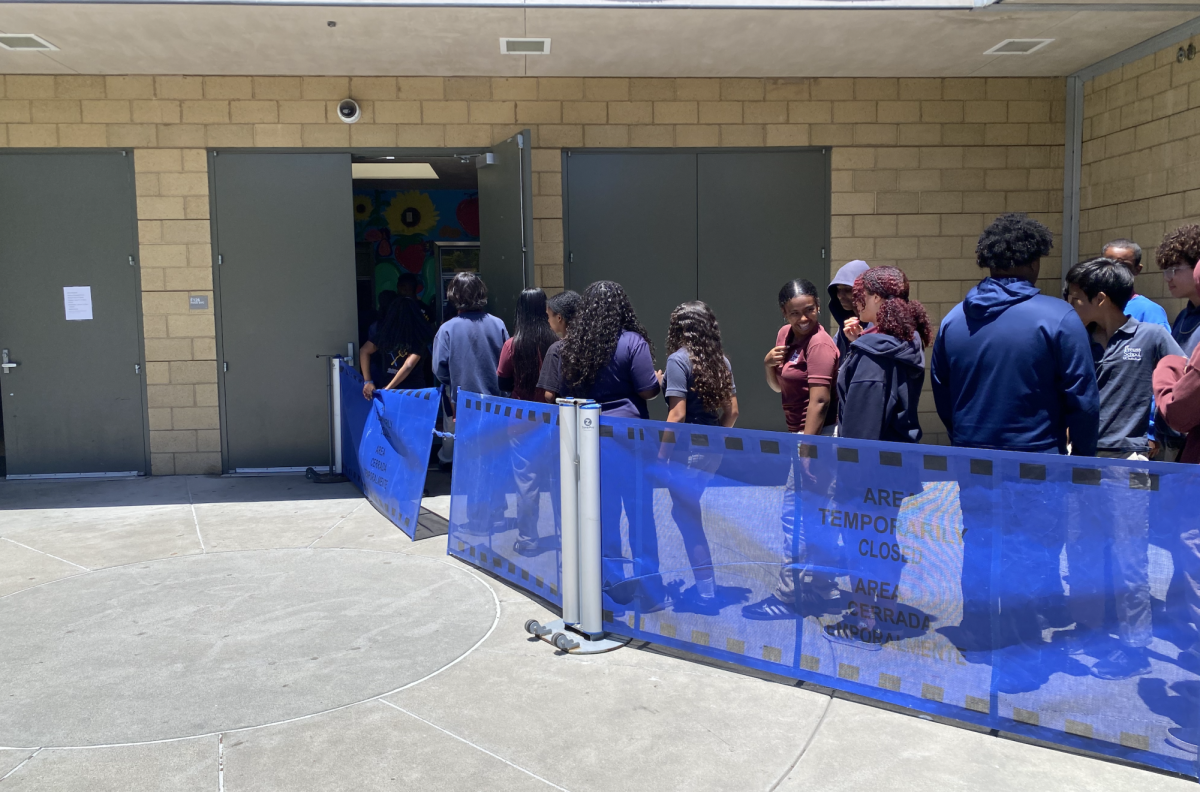
At the beginning of this school year, in October 2025, Preuss students expressed frustration with the process of obtaining school lunch. Scholars would form three separate lines in front of three serving windows, each one crowded, confusing, and full of cutting. By the time many students reached their meals, lunch time was half over.
This made it difficult for students to socialize, attend clubs, or enjoy their meals.
Just a few months ago, however, the administration implemented a new system. Instead of three chaotic lines, students now form one structured line guided by barriers—similar to a roller coaster queue.
This new method was developed by Principal Steitz alongside the vice principals after trying a variety of approaches. An administrator at the door directs students to windows one, two, or three, preventing traffic at the serving area.
“The old method was less structured and gave scholars more opportunities to cut the line,” explained Dr. Steitz. “This format came about organically…it slowly evolved as we figured out what works.”
The change produced mixed but generally positive reactions.
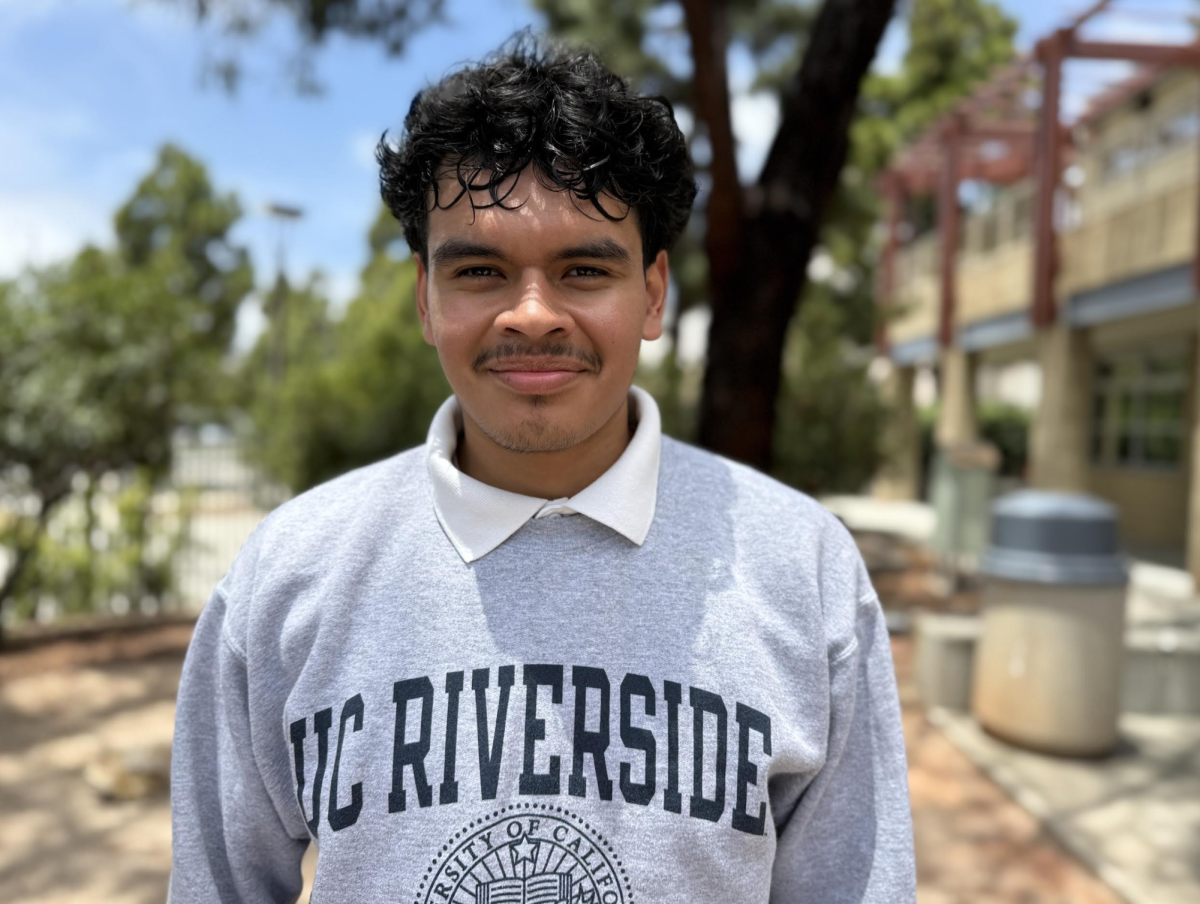
“I’ve seen noticeable improvements,” said Aabha Timalsina (‘28), a high school student interviewed about lunch lines earlier this year. “The lines feel like they take less time. Cutting is still a slight issue but it’s less notable because the line moves faster.”
Dr. Steitz confirmed the improvement from his perspective. “From what I can tell and what some scholars have said, we think the change has been an improvement. There have been decreases in the amount of cutting, and the time it takes to get lunch has not changed.”
The second major change came with the introduction of Lightning Lunch Passes, a reward system where teachers give students passes for good behavior. Students can spend one pass to skip to the front of the lunch line, or save three passes to exchange for a meal from a restaurant like Chick-Fil-A.
The dual purpose system attempts to kill two birds with one stone—addressing both lunch logistics and student behavior.
“The lunch line looks much longer because it is three lines moved into one, so the perception is that the line is longer,” Steitz explained. “With this perception, the Lightning Lunch pass is very desirable for scholars. If the passes are in demand, then they can be used to improve scholar behavior. This is the foundation of any PBIS—Positive Behavioral Interventions and Supports—system.”
PBIS is an evidence based framework used by education professionals, designed to reward habitual good behavior rather than solely punish wrongdoing.
Timalsina acknowledged the creativity of Lightning Lunch Passes. “I think it’s kind of smart if it works out. They’re trying to incentivize good behavior but also give people an opportunity to get food faster.”
However, challenges have emerged. The distributing of passes has been inconsistent between staff members, with some students accumulating multiple while others receive none.
“Standardization is an issue,” Timalsina noted. “Some kids have gotten a ton for some reason, while others haven’t gotten any at all. Different teachers give them out differently and for different things.”
Dr. Steitz acknowledged this problem. “This is a valid concern and something that the faculty and staff will need to address moving forward,” he said. “Currently there are no set standards, something that we will be discussing as a faculty and staff.”
Another unintended consequence is that many students refuse to actually use their passes.
“Students will just hoard the passes since the school lets you trade three of them in for a meal,” Timalsina explained. “So it doesn’t actually do anything for the line.”
Despite these limitations, Steitz considers the program successful in its behavioral goals.
“Seeing the scholars excited about earning a pass or giving a pass to get to the front of the line is enough of a change for myself,” he remarked.
Steitz believes students are “doing a bit of both.” While some use passes immediately to skip lines, others save them for restaurant meals.
Overall, students appreciate the administration’s willingness to experiment with solutions.
“Even if the lightning pass isn’t super useful for skipping lines, it still incentivizes good behavior supposedly,” Timalsina commented. “I’m glad admin is trying things.”