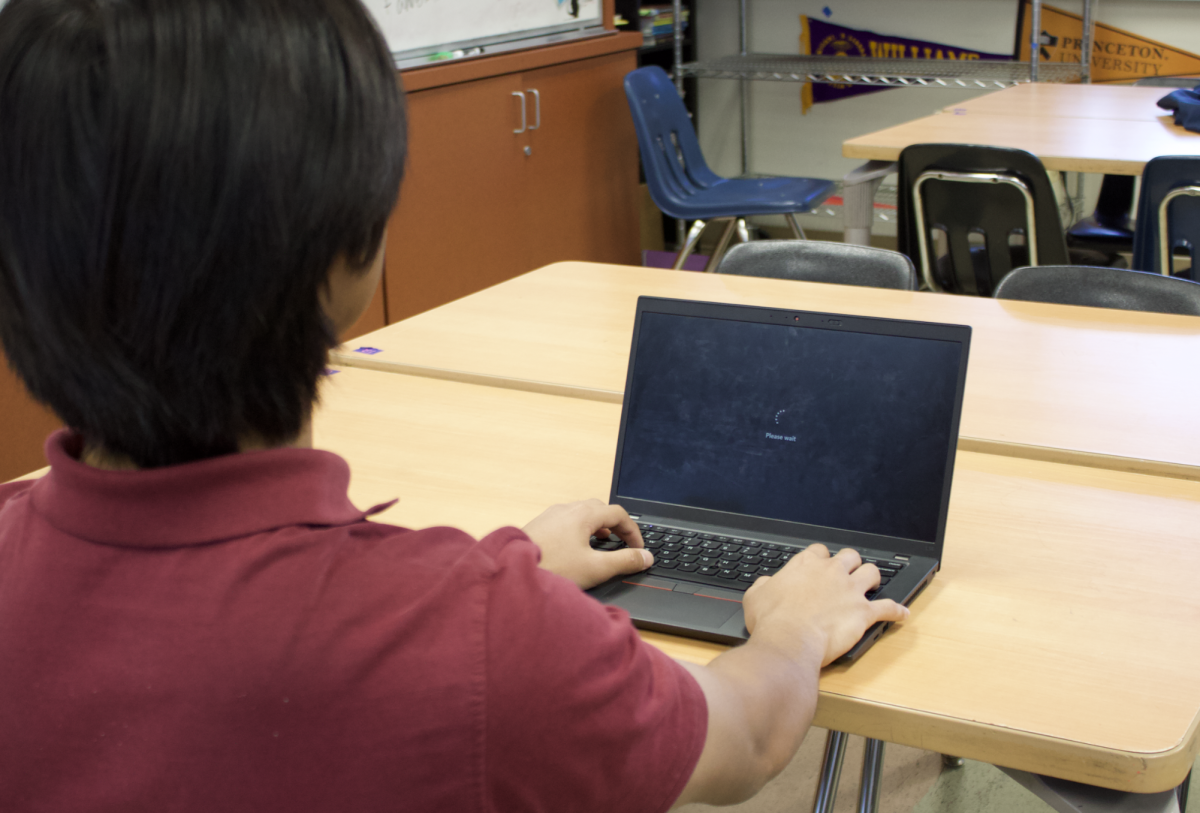
Five minutes is the time it usually takes to boot up a laptop. Five whole minutes. Now usually this would not be a problem, but Preuss is a rigorous school with a tight schedule, with challenging and time consuming AP classes. Every second matters, and time spent idly waiting for blank screens to light up adds up.
Assuming a student has four classes and the computer takes five minutes to boot up, that is already twenty minutes gone in a day. That is approximately 100 minutes a week, 300 minutes a month, and 3,600 minutes a year, not even including the loading times at home, adding another 700-800 minutes a year. 72 hours wasted each year on loading laptops and staring blankly into a screen. This is inefficient and needs to be fixed.
Preuss laptops are detrimental to students’ education and they just waste too much time. While the loading time is the main issue, the other issue is the slow running speed. These devices quite literally run off hopes and dreams and take seven solid minutes to boot up Google Chrome. This, coupled with the long commutes some students take, as well as dealing with personal work, can be strenuous on the student. This is an obstacle to education because students don’t have a lot of time at home or at school since work tends to flow into the night, taking up valuable sleep time.
In addition, school laptops sometimes don’t let students access sites that are really useful because our administration believes students can’t be trusted. Yes, students often get distracted by YouTube, sports streams, or random game websites during class, so screen monitoring is necessary to a degree. The issue is that the school has also blocked calculators, the overview for Google, and other crucial websites/functions that students frequently use. Fullscreening is also blocked, and I have no clue why that would affect someone’s education or not; it only makes it harder to zoom in when working on slideshows or Google docs. Instead of actually helping students stay on task, these restrictions actually slow the students’ work pace down.
For these reasons many students are using their own laptops, which the school does not permit since the school can not monitor what students do. Too many students have been caught using A.I. which only adds to the massive distrust amongst teachers and students. This has been an obstacle to getting productive work done during class.
Aside from the personal laptops, many students who do not have the luxury of good wifi or a fast laptop tend to fall behind just because of the number of restrictions placed on them. It is substantially harder for a student using a school laptop to work productively because of this.
If Preuss is really committed to student academic excellence then Preuss needs to also provide the necessary tools they need to succeed.